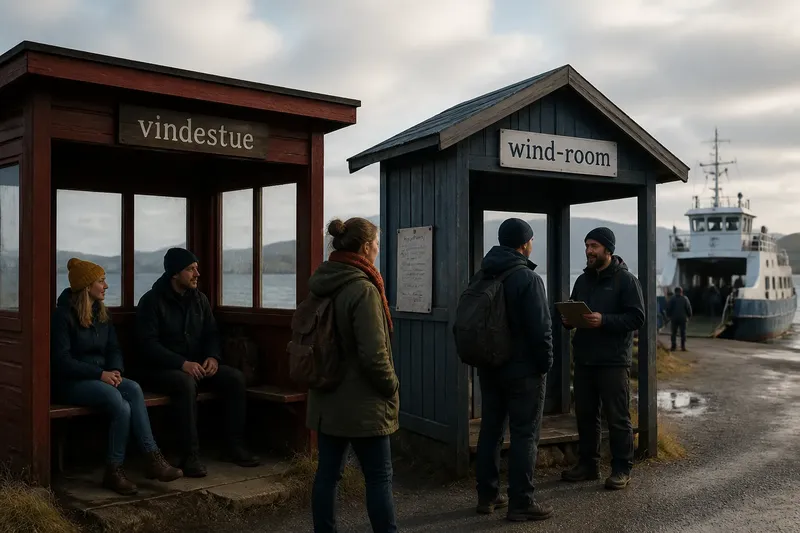
The Wool Trade and the Northern Port Town
The wool trade route shows how a northern port joined inland growers to distant buyers, and how to trace the people, records and goods behind that exchange.
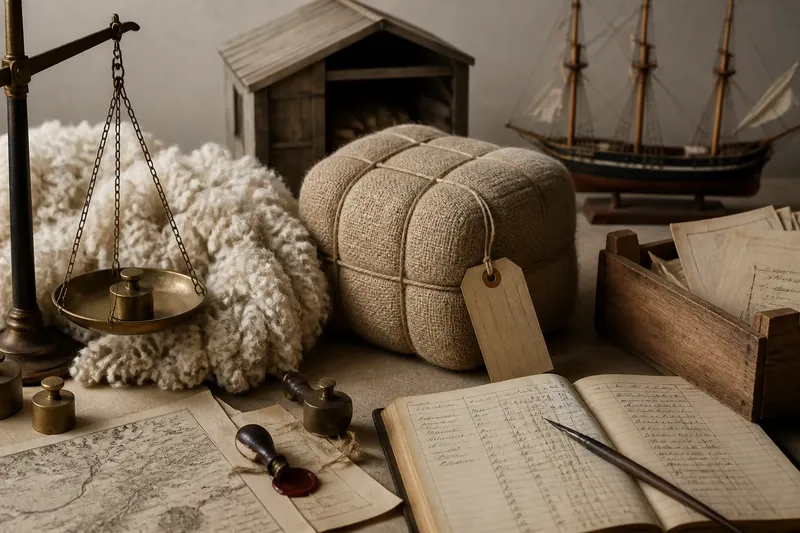
How did wool from an inland farm become a purchase made across the sea? To trace the wool trade through a northern port town, follow the cargo in order: from producer to market, through the port’s working parts, and out towards the buyer. The route reveals that exchange depended on people, decisions and records as much as ships.
Start inland
Begin with the wool, not the harbour. Identify the kind of livestock kept in the region, the season when fleeces were gathered, and the people who handled them after shearing. A grower might sell raw fleece, or it might pass first to a local dealer, sorter or cloth-maker. These distinctions matter: each changes who owns the goods, who bears the cost of moving them and what the port eventually receives.
For a particular town, look for evidence of its hinterland: market records, estate accounts, merchants’ papers, museum catalogues or local histories. Search for named valleys, farms, market centres and roads rather than assuming that the nearest countryside supplied the harbour. A port can draw goods from far inland if traders have established reliable links along the way.
Note what the wool needed before transport. Fleeces might be sorted by quality and packed for handling, while buyers could specify grades or types. Do not treat “wool” as a single uniform cargo. Differences in preparation and quality shaped what a merchant could sell and to whom.
Follow the inland route
Next, trace how the wool reached a town where merchants could assemble and sell it. Depending on the region and period, this might mean pack animals, carts, river craft or several modes in succession. Maps can show likely corridors; toll records, bridge accounts and market documents can help establish whether traffic actually used them.
Ask who organised each leg. A grower might carry a small load to a market, while a dealer combined purchases into a consignment large enough for a wholesaler or shipper. That consolidation is one of the quiet mechanisms of trade: distant buyers usually dealt with organised lots, not a scatter of individual fleeces.
Keep the route specific. If the port’s river was navigable only for part of its course, identify where goods had to be unloaded and transferred. If a market town sat between the farms and harbour, treat it as a working link, not a decorative dot on the map. The journey resembles a parcel passing through depots: each handover makes the next leg possible, but also creates a point where the cargo can be delayed, assessed or redirected.
Read the port
At the harbour, look beyond the quay. A wool shipment might require storage, weighing, inspection, packing, credit and paperwork before loading. Warehouses kept goods together; merchants negotiated ownership and terms; port workers moved cargo between store and vessel. The exchange worked because these jobs fitted together closely enough for a buyer to trust what was being shipped.
Find out which local institutions handled the trade. A customs office, merchant association, market authority or bonded warehouse could set procedures and collect fees. Their records may distinguish a cargo’s owner, origin, quantity or destination, though surviving documents will not always answer every question. Cross-check names and places across sources instead of treating one ledger as the whole story.
Then examine the vessel’s role. A ship connected the town to another market, but its departure depended on more than a suitable harbour. Merchants needed a buyer, an agreed price, a cargo ready to load and arrangements for payment. The port was a negotiating place as well as a point of departure.
Track the handovers
Follow ownership alongside the physical movement of the wool. The grower may sell to a local buyer; that buyer may pass the consignment to a merchant; a shipping agent may arrange the voyage; an overseas trader may sell it onward to a cloth-maker. These roles could overlap, but do not assume they did. Establishing who acted at each stage makes the route legible.
For each handover, ask four plain questions: who had the goods, who paid, who arranged transport, and who carried the risk if the shipment was delayed or damaged? A contract or account may answer some of these. If the documents are silent, mark the gap rather than filling it with a tidy story.
Imagine a dealer in an inland market buying fleeces from several growers and sending them to a port warehouse. The dealer’s action combines small lots into one consignment; the warehouse records its arrival and holds it while a merchant arranges a buyer and vessel. The observable result to look for in surviving evidence would be a shift from several local sellers to a single commercial shipment, perhaps visible in linked accounts or port entries. It is an illustrative reconstruction, not a claim about a particular town.
Ask the port questions?
Why did wool pass through a port town?
A port connected inland supply to buyers reachable by sea, while its merchants and facilities helped collect, store and sell cargo. A coastal location alone was not enough; trade also needed routes inland and commercial partners beyond the harbour.
What records can trace a wool shipment?
Useful sources include market and estate accounts, toll records, merchants’ correspondence, warehouse books, customs entries and shipping documents. Search across source types, since each tends to record a different stage rather than the entire journey.
Did the port always export raw fleece?
No single answer fits every town and period. Wool might be sorted or otherwise prepared before export, and some regions also processed it into yarn or cloth; local records and surviving descriptions can clarify which goods moved through a specific harbour.
How can I tell whether a route was important?
Look for repeated links among places, traders and cargo records, rather than relying on one mention. Evidence of regular market activity, transport arrangements and overseas transactions can show a working connection, even when the exact volume remains unknown.
Follow the sale
Do not end the trail at the ship. Find the destination, the buyer and the use the wool was intended to serve. It might enter another merchant’s network, reach a textile centre or be sold through a market before reaching a maker. Each onward sale could change its owner and value; the original port was one junction in a longer chain.
Compare what the inland producer supplied with what the distant buyer wanted. Were grades described differently? Did merchants combine wool from several districts? Did local processors compete with export traders for the same material? Such questions show how exchange could alter production at home: growers and dealers had reason to sort, prepare or route goods in ways that suited buyers elsewhere.
As you assemble the account, keep the claims proportional to the evidence. A map can suggest a route, but documents help establish its use; a customs entry may name a destination without telling you what happened after arrival. The wool trade route becomes clearer when each link is supported by the kind of evidence suited to it.
That is the useful measure of a northern port’s importance: not simply how many ships it received, but how well it joined inland work to distant demand. When you trace the wool trade, the most revealing detail may be an ordinary handover—a market sale, a warehouse entry or a merchant’s instruction—because that is where a route becomes an exchange.